









With the continuous development of modern manufacturing, metal forming technology plays an increasingly important role in industrial production. Hydraulic deep drawing presses are widely used in many industries because they can transform flat metal sheets into complex shapes with high efficiency and consistent quality. From everyday kitchenware to automotive components, these machines have become an essential part of modern manufacturing.
1. Widely Used in Automotive Manufacturing
The automotive industry is one of the major application areas for hydraulic drawing presses. Many vehicle components require precise forming, including fuel tank parts, body panels, structural components, metal covers and various brackets. Hydraulic deep drawing presses provide controlled forming pressure, helping manufacturers produce parts with consistent dimensions and reliable quality.
As the automotive industry continues to develop lightweight vehicles and new energy vehicles, the demand for efficient metal forming equipment is also increasing. Hydraulic presses can be configured for different materials, molds and production requirements, making them suitable for a wide range of automotive manufacturing applications.
2. Essential Equipment for Kitchenware and Household Products
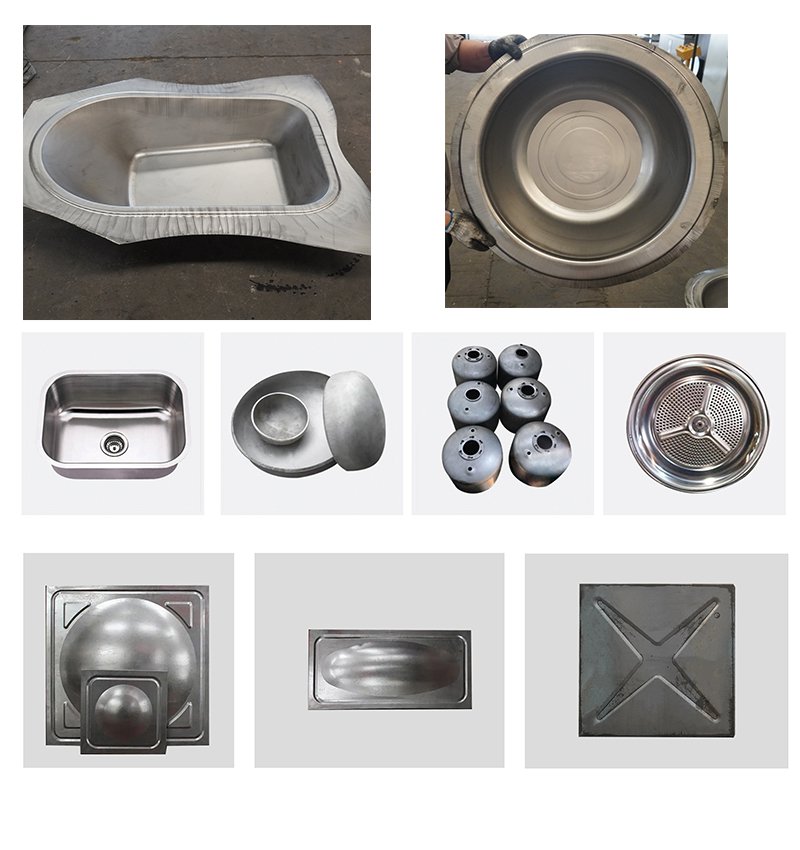
Hydraulic drawing presses are also commonly used to manufacture stainless steel pots, aluminum cookware, kitchen sinks, metal basins, containers and other household products. These products often require deep drawing processes to achieve their desired depth, shape and appearance.
Compared with manual forming methods, hydraulic presses offer better process control and higher production efficiency. With suitable molds and process parameters, manufacturers can produce products with uniform shapes and improved surface quality while reducing unnecessary material waste.
3. Applications in Home Appliances and Electrical Equipment
Many home appliances and electrical products contain formed metal parts. Washing machine components, refrigerator panels, electrical enclosures, protective covers and metal housings are examples of products that may require hydraulic drawing or stamping processes.
Hydraulic presses can be customized to meet different production needs, including specific working table dimensions, stroke lengths, pressure requirements and automation options. This flexibility helps manufacturers respond to changing product designs and market demand.
4. Supporting Diverse Metal Processing Industries
Beyond automotive manufacturing and household products, hydraulic deep drawing presses are used in the production of stainless steel containers, industrial tanks, lighting components, hardware products and other metal parts. They can process a variety of materials, including stainless steel, carbon steel and aluminum, depending on the machine configuration and tooling.
By selecting the appropriate press capacity and mold design, manufacturers can improve production consistency, optimize forming processes and expand their product range.
5. Choosing the Right Hydraulic Drawing Press
Selecting a suitable hydraulic drawing press requires consideration of product dimensions, material thickness, drawing depth, mold structure and required production output. Depending on the application, manufacturers may choose different press capacities, hydraulic cushions, ejector systems or automated feeding devices.
As a hydraulic press manufacturer, Shandong Zhongyou Heavy Industry Machinery Co., Ltd. provides customized hydraulic press solutions for different metal forming applications. By matching machine configuration with specific production requirements, manufacturers can achieve reliable performance and improve overall production efficiency.
Conclusion
Hydraulic deep drawing presses have become valuable equipment in modern industry. Their versatility, controllable forming pressure and adaptability to different molds make them suitable for a wide range of manufacturing applications. As demand for high-quality metal products continues to grow, hydraulic drawing technology will remain an important part of efficient and flexible industrial production.